
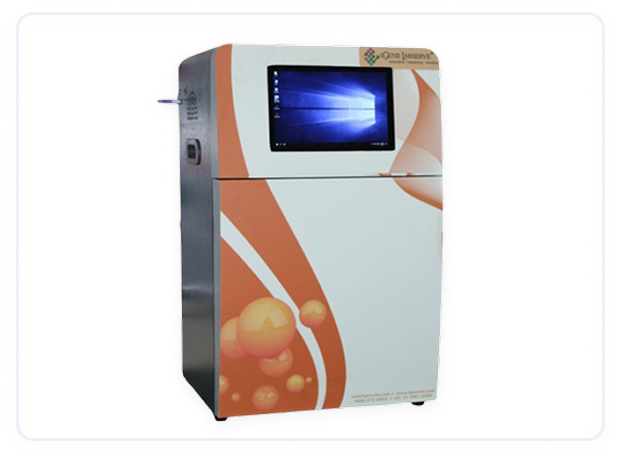
Gel Documentation System
A gel documentation system is an essential tool in molecular biology and biochemistry laboratories used for the analysis and documentation of gel electrophoresis results. Gel electrophoresis is a technique used to separate DNA, RNA, or proteins based on their size, charge, or other properties. The gel documentation system captures images of these separated bands, allowing for further analysis and quantification. Here’s an overview of gel documentation systems, their features, and their applications:
Key Features :
Imaging System :
Camera : High-resolution digital cameras capture images of the gel. Cameras can be CCD (charge-coupled device) or CMOS (complementary metal-oxide-semiconductor) sensors.
Resolution : High-resolution imaging is essential for clear and detailed visualization of bands.
Illumination :
UV Transilluminator : For gels stained with fluorescent dyes (e.g., ethidium bromide), UV transilluminators provide the necessary light to visualize DNA or RNA bands.
White Light : For gels stained with colorimetric dyes, white light sources are used for visualization.
LED Lighting : Some modern systems use LED lights, which are safer and have longer lifespans compared to traditional UV lamps.
Application : Suitable for working with low to moderate-risk biological agents that require containment and protection.
Image Capture Software :
Analysis Software : Specialized software processes and analyzes images, including band quantification, molecular weight estimation, and comparison between samples.
Documentation : Allows for the storage, annotation, and sharing of images for publication or further analysis.
Gel Platforms :
Transilluminator Stage : The platform where the gel is placed for imaging, often integrated with the illumination system.
Gel Documentation Chamber : Enclosed spaces that protect against light interference and provide controlled conditions for imaging.
Accessories :
Gel Racks and Supports : The platform where the gel is placed for imaging, often integrated with the illumination system.
Filters : Optical filters can be used to enhance specific wavelengths of light and improve the visibility of certain stains or dyes.
Data Management :
Storage : Systems often include options for storing images and data, including local storage and integration with laboratory information management systems (LIMS).
Various industries
Request More Information
Contact Us to learn more about our offerings or Request a Quote to get started today!
Contact Us

