
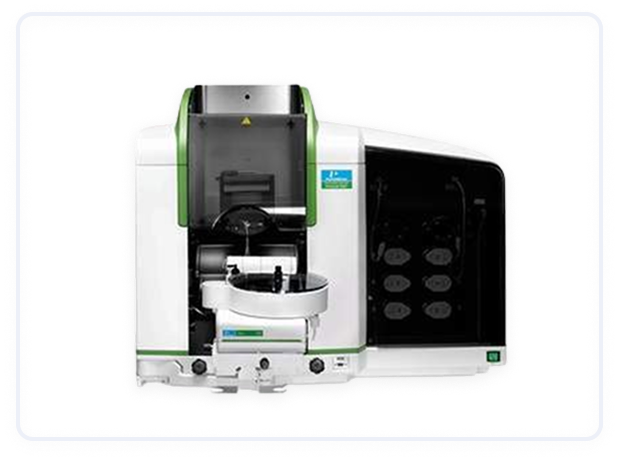
Atomic Absorption Spectroscopy (AAS)
Atomic Absorption Spectroscopy (AAS) is an analytical technique used to determine the concentration of specific elements within a sample. It’s particularly useful for analyzing metals and metalloids in various types of samples, such as water, soil, and biological tissues. Here's a breakdown of how it works and some of its key aspects:
How AAS Works
1. Sample Preparation : The sample is usually dissolved in a liquid form. In some cases, solid samples are converted into a solution through digestion.
2. Atomization : The sample solution is introduced into the flame or graphite furnace. In the flame method, the sample is aspirated into a flame where it is atomized. In the graphite furnace method, the sample is heated in a graphite tube to vaporize and atomize it.
3. Light Absorption : A light beam of a specific wavelength, which corresponds to the element being analyzed, is passed through the atomized sample. Each element absorbs light at characteristic wavelengths.
4. Detection : The amount of light absorbed by the atoms in the sample is measured. This absorption is proportional to the concentration of the element in the sample.
5. Data Analysis : The absorption data is compared against calibration standards to determine the concentration of the element in the sample.
Types of AAS
Flame Atomic Absorption Spectroscopy (FAAS) : Uses a flame to atomize the sample. It’s suitable for elements that are easily atomized and have relatively high concentrations.
Graphite Furnace Atomic Absorption Spectroscopy (GFAAS) : Uses an electrically heated graphite tube to atomize the sample. It’s more sensitive than FAAS and is used for trace analysis.
Key Features
Selectivity
AAS is highly selective, meaning it can determine the concentration of specific elements even in complex mixtures.
Sensitivity
It can detect elements at very low concentrations, often in the parts per million (ppm) or even parts per billion (ppb) range.
Types of Samples
It can analyzed various types of samples including environmental (water, soil), biological (blood, urine), and industrial samples (metals in alloys).
Types of AAS
Flame Atomic Absorption Spectroscopy (FAAS) : Uses a flame to atomize the sample. It’s suitable for elements that are easily atomized and have relatively high concentrations.
Graphite Furnace Atomic Absorption Spectroscopy (GFAAS) : Uses an electrically heated graphite tube to atomize the sample. It’s more sensitive than FAAS and is used for trace analysis.
Various industries
Request More Information
Contact Us to learn more about our offerings or Request a Quote to get started today!
Contact Us

