
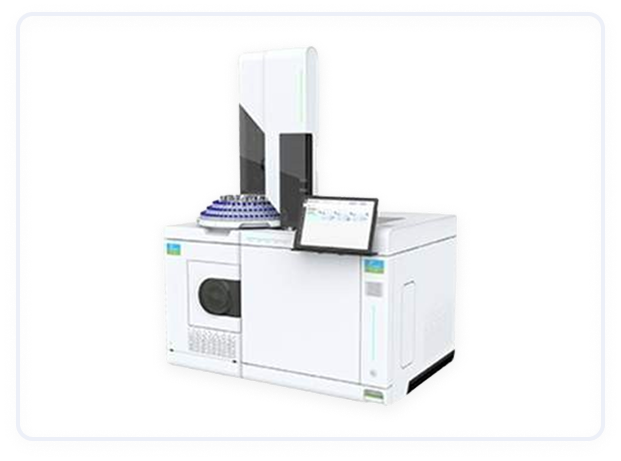
Gas Chromatography (GC)
Gas Chromatography (GC) is a widely used analytical technique in chemistry and biochemistry for separating and analysing compounds that can be vaporized without decomposition. It is primarily used to analyse volatile organic compounds (VOCs), gases, and other substances that can exist in the gas phase. GC is particularly useful for applications like environmental testing, food and beverage analysis, forensic science, and pharmaceutical quality control.
Key Components of Gas Chromatography
Sample Injector : The sample is injected into the GC system, typically using a syringe. The sample is often in a liquid or solid state but is vaporized in the injector.
Carrier Gas : An inert gas (usually helium or nitrogen) is used to carry the sample through the column. This carrier gas ensures that the sample moves through the column under controlled conditions.
Chromatographic Column :
This is a long, thin tube (often coiled) that is usually packed with a stationary phase material or lined with a stationary phase. The stationary phase is responsible for separating the components of the sample based on their interactions with it (adsorption or solubility).
Columns can be of two types: packed columns (containing a solid stationary phase) or capillary columns (which contain a thin film of liquid stationary phase).
Detector : Controls the temperature of the column, which is essential for separating compounds based on their boiling points and interactions with the stationary phase.
Data System : A computer or digital system that records and analyzers the data from the detector, typically producing a chromatogram.
Various industries
Request More Information
Contact Us to learn more about our offerings or Request a Quote to get started today!
Contact Us

