
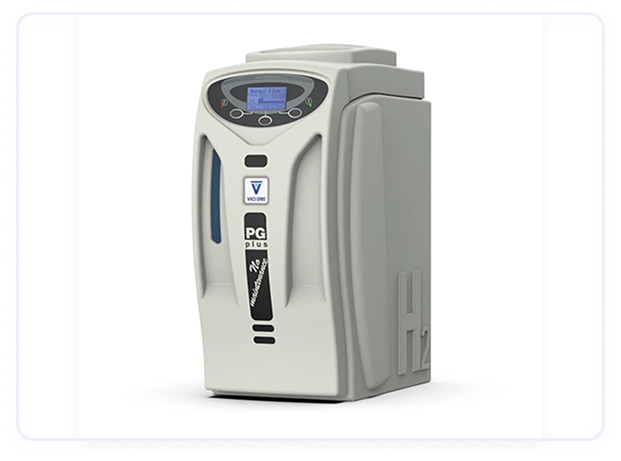
GC FID Hydrogen Gas Generator
A GC FID Hydrogen Gas Generator is a specialized device used to provide high-purity hydrogen gas for Gas Chromatography (GC) systems that use a Flame Ionization Detector (FID). In GC-FID analysis, hydrogen gas is used as the fuel for the FID to produce a flame, which is essential for detecting organic compounds in a sample. The hydrogen gas generator is an integral part of ensuring that the GC-FID system operates efficiently and safely by supplying a stable and continuous hydrogen supply.
Key Features and Functions of a GC FID Hydrogen Gas Generator :
Hydrogen Generation :
The generator produces hydrogen gas (H₂) on-site by using a process called electrolysis or hydrocarbon reforming.
In electrolysis, water (H₂O) is split into hydrogen and oxygen using electricity. This process is energy-intensive but provides a high-purity source of hydrogen.
Purity and Pressure Control :
The generator typically produces high-purity hydrogen gas (up to 99.999% purity) to ensure optimal performance of the FID and accurate chromatographic analysis.
It regulates the output pressure to match the requirements of the FID detector, typically around 5-20 psi (pounds per square inch), depending on the instrument specifications.
Safety Features :
Hydrogen is a highly flammable gas, so safety is a key concern. GC FID hydrogen gas generators come with safety mechanisms like leak detection, automatic shutdown, and pressure regulation to prevent accidents.
Some models also include gas purifiers to remove impurities (such as moisture or hydrocarbons) from the hydrogen to ensure that the FID detector flame is stable and consistent.
Compact and On-Site Gas Supply :
Instead of relying on cylinders of compressed hydrogen gas, which require frequent replacement and pose handling and storage challenges, a hydrogen gas generator provides a continuous and cost-effective solution by generating hydrogen on-site.
This eliminates the need for gas cylinder deliveries, reducing costs and increasing convenience.
Flow Rate and Delivery :
The flow rate of hydrogen gas supplied by the generator is typically adjustable to suit the specific needs of the FID detector, and it is monitored and regulated for consistent delivery during operation.
Integrated Systems :
Some hydrogen gas generators are designed with integrated pressure regulators, flow meters, and filters, simplifying the setup and maintenance process.
Modern models often have digital interfaces for monitoring, setting, and adjusting parameters such as gas purity, pressure, and flow rate.
How it Works in a GC FID System :
Gas Chromatography (GC): The GC system separates volatile compounds in a sample based on their interaction with a stationary phase and a mobile phase (carrier gas, often helium or nitrogen).
Flame Ionization Detector (FID): In the FID, a hydrogen flame is created using the hydrogen gas produced by the generator. The detector measures the ions produced when organic compounds in the sample pass through the flame. These ions generate a current, which is detected and used to quantify the sample components.
Hydrogen Gas Supply: The hydrogen gas generator ensures that a stable and pure hydrogen supply is delivered to the FID. The high purity of hydrogen is crucial because impurities can lead to unstable flames, reduced sensitivity, and interference in the analysis.
How it Works in a GC FID System :
Gas Chromatography (GC): The GC system separates volatile compounds in a sample based on their interaction with a stationary phase and a mobile phase (carrier gas, often helium or nitrogen).
Flame Ionization Detector (FID): In the FID, a hydrogen flame is created using the hydrogen gas produced by the generator. The detector measures the ions produced when organic compounds in the sample pass through the flame. These ions generate a current, which is detected and used to quantify the sample components.
Hydrogen Gas Supply: The hydrogen gas generator ensures that a stable and pure hydrogen supply is delivered to the FID. The high purity of hydrogen is crucial because impurities can lead to unstable flames, reduced sensitivity, and interference in the analysis.
Various industries
Request More Information
Contact Us to learn more about our offerings or Request a Quote to get started today!
Contact Us

