
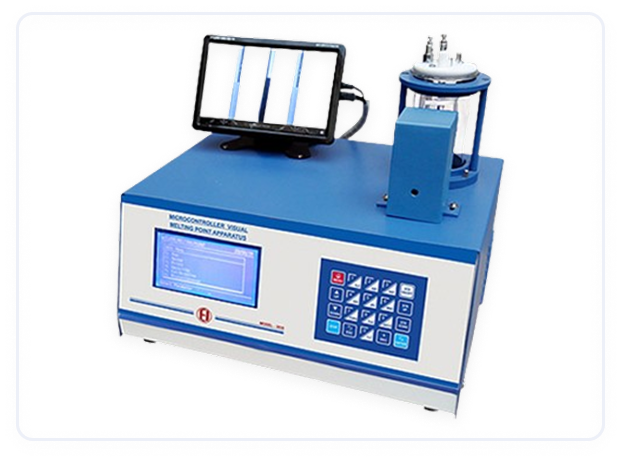
Melting Point Apparatus
A Melting Point Apparatus is a laboratory instrument used to determine the melting point of solid substances. The melting point is the temperature at which a solid turns into a liquid under standard atmospheric pressure. This property is a key characteristic of many substances, especially in the pharmaceutical, chemical, and food industries, where purity and consistency are critical.
Key Features and Function of a Melting Point Apparatus :
Purpose and Function :
Measure Melting Point : The primary purpose of the melting point apparatus is to determine the precise temperature at which a solid substance melts.
Quality Control and Purity Testing : The melting point is an important indicator of the purity of a substance. Impure substances typically have a lower and broader melting point range compared to pure substances, which have a sharp and narrow melting point range.
Identification of Substances : Melting point determination can also be used to help identify substances, as every pure compound has a characteristic melting point. It is often used as part of the analytical testing of raw materials or finished products.
Consistency and Product Development : In industries like pharmaceuticals and chemicals, melting point data is used to ensure batch-to-batch consistency and the correct formulation of products.
How a Melting Point Apparatus Works :
A typical melting point apparatus consists of a heating element, a sample holder, a thermometer or temperature sensor, and a viewing window. The sample is gradually heated, and the melting point is determined by observing the temperature at which the sample changes from solid to liquid.
Heating Block : The heating block or unit controls the temperature and gradually heats the sample.
Sample Tube : During rotation, the tablets are subjected to impacts and abrasions as they rub against one another and the walls of the drum. This mimics the stresses tablets experience during handling, transportation, and packaging.
Thermometer or Sensor : The thermometer or temperature sensor monitors the temperature during the heating process. The temperature is carefully controlled and recorded.
Viewing Window or Microscope : Some models have a magnifying lens or a microscope to observe the sample's melting behavior. This allows precise detection of the moment the substance starts to melt.
Types of Melting Point Apparatus :
Manual Melting Point Apparatus :
Basic Models : These are traditional instruments that use a heating bath, and the temperature is manually adjusted. The operator observes the sample through a magnifying lens or microscope.
Temperature Range : Typically, they have a range from 30°C to 300°C or higher.
Use : These are often used in laboratories for routine quality control and research where precision is less critical.
Digital Melting Point Apparatus :
Automatic Temperature Control : These models have more advanced features, including automatic temperature control, digital readouts, and built-in data recording systems. They ensure more precise and reproducible results.
Advanced Features : Many modern melting point apparatuses have the ability to store data, print results, and even interface with computers for data analysis.
Precision : Digital models offer higher precision and can record the melting point with greater accuracy.
Capillary Tube Melting Point Apparatus :
Classic Method : This is the most commonly used method where the substance is placed in a thin capillary tube and heated slowly. It is widely used in educational and research labs.
Optical Melting Point Apparatus :
Advanced Observation : These instruments use optical sensors or cameras to observe the melting process. They provide detailed visual data and precise determination of the melting point.
Ideal for research labs : These systems can be automated to analyze the temperature at which the substance melts, and they are often integrated with digital systems for advanced data analysis.
Various industries
Request More Information
Contact Us to learn more about our offerings or Request a Quote to get started today!
Contact Us

