
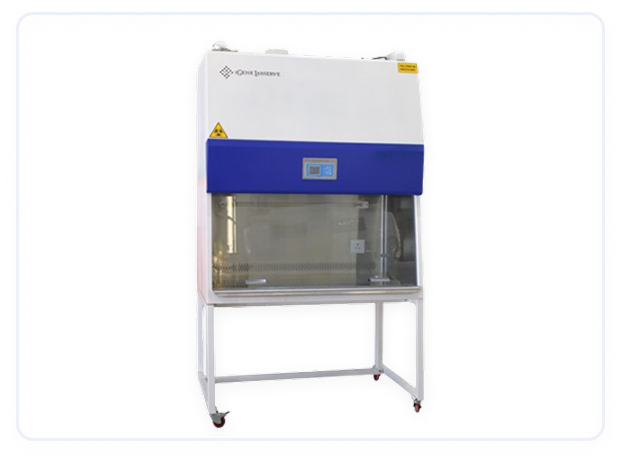
Biosafety Cabinet
A bio safety cabinet (BSC) is a critical piece of equipment used in laboratories to protect both the user and the environment from exposure to potentially hazardous biological agents. It provides a controlled environment where research involving pathogens or other bio hazards can be conducted safely.
Types of Bio safety Cabinets :
Class I Biosafety Cabinet :
Protection : Provides protection for the user and the environment but not for the sample.
Airflow : Air is drawn into the cabinet and filtered before being exhausted outside the laboratory.
Application : Used for handling low to moderate-risk biological agents that do not require containment.
Class II Bio safety Cabinet :
Protection : Provides protection for the user, the environment, and the sample.
Airflow : A combination of laminar flow and HEPA (High-Efficiency Particulate Air) filtration systems. Air is drawn into the cabinet, passed through a HEPA filter, and then recirculated or exhausted.
Sub types :
Class II Type A1/A2 : Recirculates air within the cabinet but may be ducted for external exhaust.
Class II Type B1/B2 : Primarily designed for use with volatile chemicals and radioactive materials, with Type B2 providing 100% external exhaust.
Application : Suitable for working with low to moderate-risk biological agents that require containment and protection.
Class III Biosafety Cabinet :
Protection : Provides the highest level of protection for the user, the environment, and the sample. It is completely enclosed with a negative pressure system and is often referred to as a “glove box.”
Airflow : All air is filtered through HEPA filters before being exhausted. The cabinet is sealed to prevent any escape of contaminants.
Application : Used for handling high-risk biological agents and for work that requires maximum containment, such as work with select agents and toxins.
Key Features of Biosafety Cabinets
HEPA Filters
High-efficiency filters that trap airborne particles, including microorganisms, to ensure clean airflow within and outside the cabinet.
Laminar Flow
Provides a constant, unidirectional airflow that helps prevent contamination of samples and protects the user.
Work Surface
Often made of stainless steel and designed to be easily cleaned and disinfected.
Safety Features
Include alarms for airflow disruptions, UV lights for decontamination, and easy-to-use controls.
Various industries
Request More Information
Contact Us to learn more about our offerings or Request a Quote to get started today!
Contact Us

