
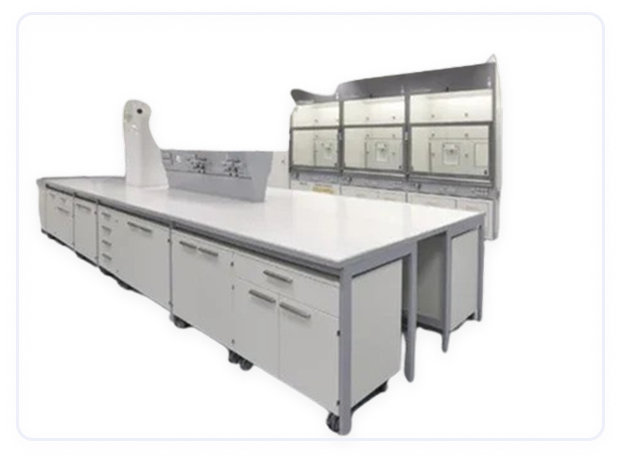
Aluminium Alloy Laboratory Fume Hood
An aluminium alloy laboratory fume hood is a type of fume hood used in laboratories to safely ventilate hazardous or noxious fumes, vapours, gases, and particulates generated during experiments. Made from aluminium alloys, these fume hoods offer specific benefits, including durability, corrosion resistance, and lightweight properties. Here’s an overview of aluminium alloy fume hoods
Key Features of Aluminium Alloy Laboratory Fume Hoods :
Material Composition :
The fume hood is constructed from aluminium alloys, which combine aluminium with other metals like magnesium, silicon, or copper. This gives the fume hood enhanced strength, durability, and resistance to corrosion, particularly from acids, alkalis, and other chemicals commonly found in laboratory environments.
Aluminium is lightweight yet sturdy, which allows for easier installation and transport.
Corrosion Resistance :
Aluminium alloy has excellent resistance to corrosion from chemicals, moisture, and other environmental factors. This is particularly valuable in laboratories dealing with aggressive chemicals or corrosive substances, as the fume hood will maintain its integrity over time without deterioration.
Lightweight :
Compared to other materials like steel, aluminium alloy is much lighter, making it easier to handle, install, and maintain. This makes the fume hood more adaptable in terms of positioning and mobility, particularly in labs that require frequent reconfigurations.
Durability :
Aluminium alloys are known for their long-lasting durability. A well-maintained aluminium alloy fume hood can last for decades, with minimal wear and tear, making it a cost-effective choice over the long term.
Ventilation System :
The primary purpose of any laboratory fume hood, including those made from aluminium alloys, is to exhaust hazardous fumes. These fume hoods have a fan, ductwork, and exhaust system that pull air from the lab workspace and release it outside, preventing contaminants from affecting the user’s health or the surrounding environment.
The aluminium alloy construction can be easily integrated with high-performance ventilation systems to ensure proper airflow and containment of hazardous fumes.
Chemical Resistance :
Aluminium alloy fume hoods are designed to withstand exposure to a wide variety of chemicals, especially when used in labs dealing with corrosive agents. The alloy's resistance to chemical degradation makes it particularly suitable for research, testing, or industrial applications that deal with harsh substances.
Safety Features :
Many aluminium alloy fume hoods come with built-in safety features such as sash windows (typically made of clear, tempered glass), adjustable air intakes, and baffles to optimize airflow.
Emergency features such as alarms or airflow monitors may be included to ensure the ventilation system is functioning properly and that no hazardous fumes are escaping into the lab.
Benefits of Aluminium Alloy Laboratory Fume Hoods :
Enhanced Chemical Safety : The primary advantage of using an aluminium alloy fume hood is the safe removal of toxic, flammable, or harmful fumes, vapours, or gases that might pose a risk to researchers, students, or lab technicians. Proper ventilation reduces the risk of chemical exposure and accidents.
Lightweight Design : The lightweight nature of aluminium allows for easier transportation, handling, and installation, which is beneficial when redesigning lab spaces or upgrading existing equipment.
Corrosion Resistance : Aluminium's inherent resistance to corrosion extends the life of the fume hood, even in laboratories where harsh chemicals are frequently used. This helps reduce maintenance costs and downtime due to rust or degradation.
Low Maintenance : Due to its corrosion resistance and durable construction, aluminium alloy fume hoods require less frequent maintenance compared to other materials like wood or steel.
Eco-Friendly : Aluminium is 100% recyclable, and using aluminium alloy fume hoods can contribute to more sustainable lab operations. It reduces the environmental impact compared to materials that are harder to recycle.
Customization : Aluminium alloy fume hoods can be customized to meet specific laboratory requirements, including variations in size, airflow capacity, and internal shelving or containment systems. This makes them suitable for a wide range of lab environments, from educational institutions to industrial research.
Benefits of Aluminium Alloy Laboratory Fume Hoods :
Enhanced Chemical Safety : The primary advantage of using an aluminium alloy fume hood is the safe removal of toxic, flammable, or harmful fumes, vapours, or gases that might pose a risk to researchers, students, or lab technicians. Proper ventilation reduces the risk of chemical exposure and accidents.
Lightweight Design : The lightweight nature of aluminium allows for easier transportation, handling, and installation, which is beneficial when redesigning lab spaces or upgrading existing equipment.
Corrosion Resistance : Aluminium's inherent resistance to corrosion extends the life of the fume hood, even in laboratories where harsh chemicals are frequently used. This helps reduce maintenance costs and downtime due to rust or degradation.
Low Maintenance : Due to its corrosion resistance and durable construction, aluminium alloy fume hoods require less frequent maintenance compared to other materials like wood or steel.
Eco-Friendly : Aluminium is 100% recyclable, and using aluminium alloy fume hoods can contribute to more sustainable lab operations. It reduces the environmental impact compared to materials that are harder to recycle.
Customization : Aluminium alloy fume hoods can be customized to meet specific laboratory requirements, including variations in size, airflow capacity, and internal shelving or containment systems. This makes them suitable for a wide range of lab environments, from educational institutions to industrial research.
Various industries
Request More Information
Contact Us to learn more about our offerings or Request a Quote to get started today!
Contact Us

