
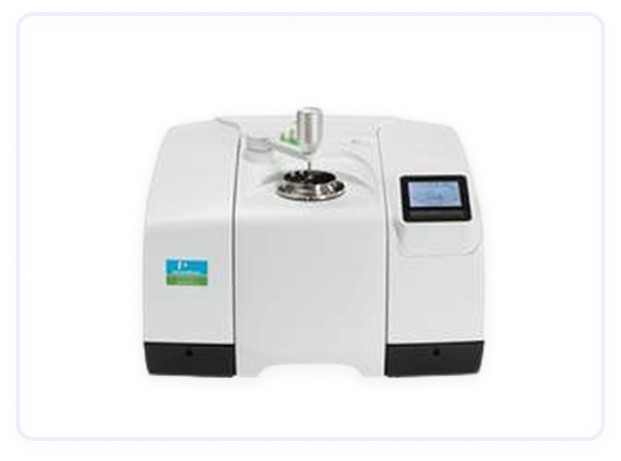
Fourier Transform Infrared Spectrometers
FTIR (Fourier Transform Infrared) instruments are powerful tools used for molecular analysis, allowing researchers to identify chemical compounds by measuring their absorption of infrared (IR) radiation. FTIR spectrometers offer high sensitivity and precision, and they are widely used in a variety of fields, such as chemistry, materials science, pharmaceuticals, environmental analysis, and biology.
Types of FTIR Instruments:
FTIR instruments can be classified based on their configuration, sensitivity, and specific applications. Here are the common types:
Traditional FTIR Spectrometers
These instruments are used for routine laboratory analysis of solid, liquid, or gas samples. They can be equipped with multiple sample holders, such as ATR (Attenuated Total Reflectance), transmission, reflection, or diffuse reflection.
These systems provide high-quality spectral data and are widely used in academic, industrial, and government laboratories.
FTIR Imaging Systems
FTIR imaging instruments combine FTIR spectroscopy with high-resolution microscopy to create chemical images of a sample. These instruments can map the chemical composition of a sample at microscopic scales (often down to the micrometer or nanometer scale), useful in materials science, biology, and forensics.
Portable FTIR Instruments
These are compact, field-deployable versions of FTIR spectrometers, designed for use outside the laboratory. Portable FTIRs are commonly used in environmental monitoring, on-site industrial inspections, and forensics.
They are equipped with smaller optics and are less sensitive compared to traditional systems but are valuable for quick, in-field analysis.
FTIR with ATR (Attenuated Total Reflectance)
ATR-FTIR is a popular technique that allows direct sampling of solids, liquids, and gels without the need for sample preparation. The sample is placed in contact with a crystal, and infrared light is internally reflected through the crystal, interacting with the sample's surface. ATR-FTIR is commonly used for analyzing surfaces and coatings.
FTIR with Gas Cells
FTIR systems are often equipped with gas cells for studying gases or volatile compounds. The gas cell is designed to hold the sample gas in a controlled environment, where it can interact with the infrared light for spectral analysis. These systems are useful in environmental monitoring, pollution studies, and industrial gas analysis.
Key Specifications of FTIR Instruments:
Wavelength Range
FTIR spectrometers typically operate in the infrared region of the electromagnetic spectrum, ranging from about 4000 cm⁻¹ to 400 cm⁻¹, which corresponds to the mid-infrared (MIR) region.
Some instruments can also be extended into the near-infrared (NIR) or far-infrared (FIR) regions depending on the application.
Resolution
The resolution of an FTIR spectrometer determines the smallest difference in wavenumber that can be distinguished in the spectrum. The higher the resolution, the more detailed the spectrum. FTIR instruments commonly have resolutions between 0.1 cm⁻¹ to 4 cm⁻¹.
Sensitivity
Sensitivity refers to the ability of the FTIR instrument to detect low levels of analyte. This depends on the quality of the detector, the interferometer, and the optical components.
Scan Speed
FTIR spectrometers can perform scans at different speeds, depending on the sensitivity required. Faster scan rates may sacrifice some sensitivity but are useful for rapid data collection.
Software and Data Analysis
FTIR instruments are typically controlled by sophisticated software that allows for spectral analysis, peak identification, quantitative analysis, and data visualization. Many instruments are integrated with advanced data processing tools like chemometrics, which help analyze complex samples.
Key Specifications of FTIR Instruments:
Wavelength Range
FTIR spectrometers typically operate in the infrared region of the electromagnetic spectrum, ranging from about 4000 cm⁻¹ to 400 cm⁻¹, which corresponds to the mid-infrared (MIR) region.
Some instruments can also be extended into the near-infrared (NIR) or far-infrared (FIR) regions depending on the application.
Resolution
The resolution of an FTIR spectrometer determines the smallest difference in wavenumber that can be distinguished in the spectrum. The higher the resolution, the more detailed the spectrum. FTIR instruments commonly have resolutions between 0.1 cm⁻¹ to 4 cm⁻¹.
Sensitivity
Sensitivity refers to the ability of the FTIR instrument to detect low levels of analyte. This depends on the quality of the detector, the interferometer, and the optical components.
Scan Speed
FTIR spectrometers can perform scans at different speeds, depending on the sensitivity required. Faster scan rates may sacrifice some sensitivity but are useful for rapid data collection.
Software and Data Analysis
FTIR instruments are typically controlled by sophisticated software that allows for spectral analysis, peak identification, quantitative analysis, and data visualization. Many instruments are integrated with advanced data processing tools like chemometrics, which help analyze complex samples.
Various industries
Request More Information
Contact Us to learn more about our offerings or Request a Quote to get started today!
Contact Us

