
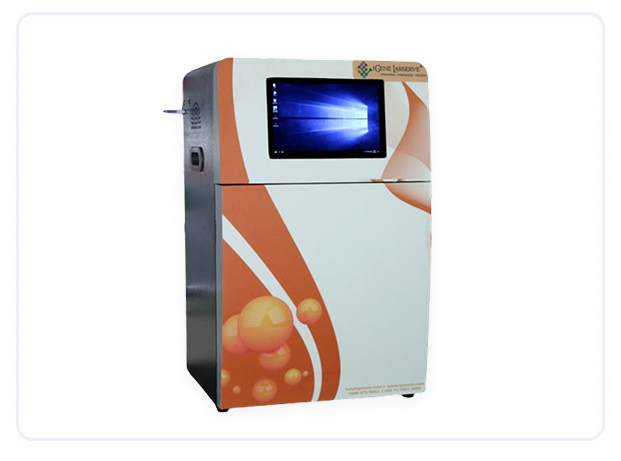
Gel Documentation and Analysis Systems
Gel Documentation and Analysis Systems are essential laboratory tools used to capture, document, and analyze the results of gel electrophoresis experiments. These systems are commonly used in molecular biology and biochemistry to visualize nucleic acids (DNA, RNA) or proteins that have been separated using gel electrophoresis, as well as to quantify and analyze the results. These systems typically combine a high-resolution camera, specialized lighting, software, and sometimes additional hardware like a UV trans illuminator, to capture images of the gel and perform various analyses.
Key Components of Gel Documentation and Analysis Systems :
Camera :
The camera is the core component that captures the image of the gel. High-resolution cameras with adjustable settings (e.g., exposure time, zoom, and focus) are used to ensure clear, high-quality images. The camera may be positioned above or below the gel, depending on the type of analysis.
UV or Blue Light Trans illuminator :
UV Transilluminator: Often used for DNA or RNA gels stained with UV-sensitive dyes (e.g., ethidium bromide, SYBR Green). UV light excites the dye, causing it to fluoresce, and the system captures this fluorescence.
Blue Light Transilluminator: A safer alternative to UV, used for dyes like SYBR Safe or GelRed, which fluoresce under blue light.
Gel Tray or Platform :
This is the area where the gel is placed for imaging. It may be designed with a transparent or reflective surface, allowing light to pass through or reflect for optimal imaging of fluorescently stained samples.
Optical Filters :
These filters are used to isolate specific wavelengths of light required for detecting different stains (e.g., for DNA, RNA, or protein gels). They may include filters for green, blue, UV, or white light, depending on the detection method and the dye used.
Software :
The software is crucial for image capture, analysis, and quantification. It typically provides tools for:
Gel Image Capture : Allows users to adjust exposure, focus, and other camera settings.
Band Analysis : Measures the intensity, size, and position of bands in gel images. This is useful for quantifying DNA/RNA or protein expression levels.
Molecular Weight Estimation : Compares the sample bands with a molecular weight ladder to estimate the size of DNA or protein fragments.
Lane and Band Normalization : Corrects for variation in gel loading or staining intensity by normalizing data to reference bands or markers.
Lane Profiling : Analyzes the pattern of bands in different lanes for comparative analysis.
Illumination Source :
White Light : Used for imaging Coomassie Brilliant Blue or silver-stained protein gels.
Fluorescent Light : Used for imaging gels stained with fluorescent dyes that emit light when excited by a specific wavelength.
Types of Gel Documentation Systems :
Basic Gel Documentation Systems :
These are the most straightforward systems that include a camera, basic software for image capture, and analysis tools for simple visual documentation. They are typically used for recording results and generating images for reports but may lack advanced analysis capabilities.
Advanced Gel Documentation Systems :
These systems are designed for more detailed analysis and quantification, offering enhanced capabilities for:
Quantitative Image Analysis : Used for determining relative amounts of nucleic acids or proteins in bands.
Multi-channel Imaging : Captures multiple types of fluorescence simultaneously for complex gel images.
Long-Exposure Imaging : For more sensitive detection of weak bands.
Molecular Weight Analysis : Identifies the size of separated fragments by comparing them with a ladder or marker.
Integrated Systems :
Some systems come as complete, integrated solutions, offering the camera, trans illuminator, and software as a unified package. These are designed for ease of use and often come with specialized tools for precise analysis of molecular data.
Various industries
Request More Information
Contact Us to learn more about our offerings or Request a Quote to get started today!
Contact Us

