
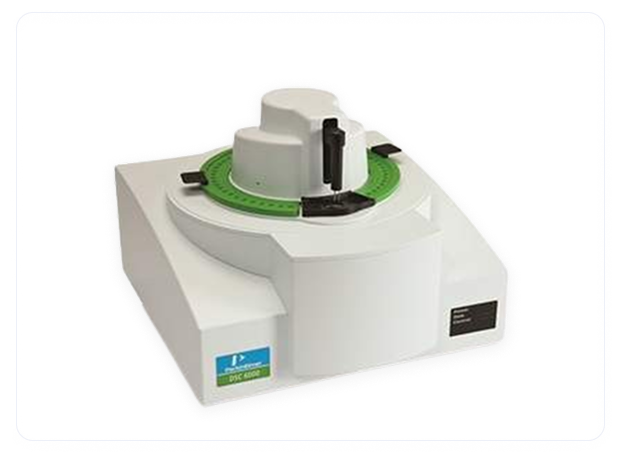
Thermogravimetry Analysis (TGA)
Thermogravimetric Analysis (TGA) is a widely used thermal analysis technique that measures the change in the mass of a sample as a function of temperature or time under a controlled atmosphere. This technique provides information about the thermal stability, composition, and decomposition behavior of materials, and is used in various industries to study the properties of a wide range of materials.
Basic Principle of TGA:
In TGA, a small sample is heated or cooled at a constant rate in a controlled environment, typically in the presence of air, nitrogen, or other gases. As the temperature changes, the mass of the sample is continuously measured using a highly sensitive balance. The resulting data is typically plotted as mass loss vs. temperature or mass loss vs. time.
The mass changes observed in TGA can be due to a variety of processes, such as:
Evaporation of solvents or volatile compounds.
Decomposition of materials (e.g., polymers, metals, etc.).
Oxidation or reduction reactions.
Phase transitions that involve a loss or gain of mass (e.g., dehydration or desorption).
TGA Instrument Components:
Sample Holder (Pan): Holds the sample during the analysis, often made from materials like platinum or aluminum.
Thermo couple: Measures the temperature of the sample and ensures uniform heating.
Balance: Measures the change in mass of the sample with high precision.
Heating Furnace: Provides the controlled temperature environment for the sample.
Gas Flow Control System: Allows the introduction of inert gases (e.g., nitrogen) or reactive gases (e.g., oxygen) during the experiment.
Data Acquisition System: Records and analyzes the mass change and temperature data.
Various industries
Request More Information
Contact Us to learn more about our offerings or Request a Quote to get started today!
Contact Us

