
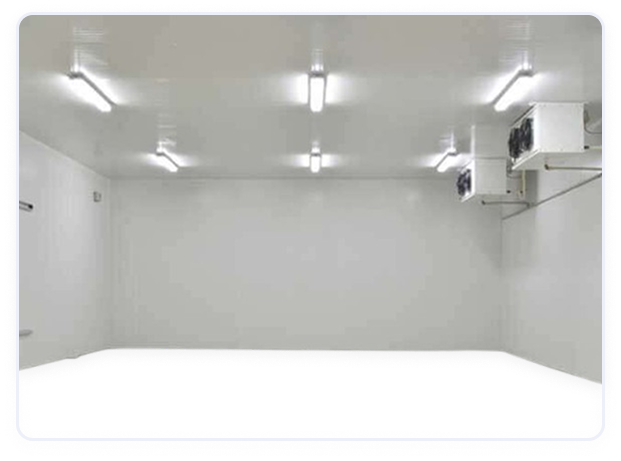
Cold Rooms
A cold room is a controlled environment specifically designed to store perishable goods at low temperatures to preserve their freshness, prevent spoilage, and extend shelf life. Cold rooms are widely used in industries such as food storage, pharmaceuticals, healthcare, and other sectors where temperature-sensitive products need to be kept under specific conditions.
Key Features of Cold Rooms :
Temperature Control :
Cold rooms are designed to maintain a consistent temperature, typically between -20°C to +8°C (depending on the product being stored).
Some cold rooms are even designed for freezing at temperatures below -18°C or -20°C for deep freezing perishable items like meats, seafood, and ice cream.
The temperature is often regulated by an advanced cooling system such as refrigeration units or air conditioning systems that maintain the required temperature range.
Insulation :
Cold rooms are equipped with insulated panels (often made of polyurethane, polystyrene, or other high-performance materials) to prevent heat transfer and ensure energy efficiency. These panels help maintain internal temperatures while reducing energy consumption.
The walls, ceilings, and floors of the cold room are usually insulated to create an airtight environment that helps in keeping the temperature stable.
Refrigeration Systems :
Cold rooms utilize refrigeration units or chillers that continuously remove heat from the air to maintain the low temperature. These systems include compressors, evaporators, and condensers.
The cooling system is often customized to suit the size of the cold room, the types of goods stored, and the required temperature settings.
Humidity Control :
In some cold rooms, humidity levels are also controlled to prevent product deterioration. Humidity control is especially important in environments where products like fruits, vegetables, or flowers are stored. Excess moisture can lead to mold, while too little can cause dehydration of the products.
Shelving and Storage Solutions :
Adjustable shelving, racks, or pallets are commonly used to store products in cold rooms. These systems help to optimize the storage capacity and organize items efficiently.
Cold storage solutions may also include walk-in freezers or reach-in coolers for smaller quantities of items.
Access and Safety :
Cold rooms are designed with easy access doors and automatic closing systems to minimize heat entry. In large cold rooms, rapid-roll doors may be used to ensure minimal temperature fluctuation when the room is accessed.
Cold rooms are equipped with safety features such as temperature alarms, emergency lighting, and backup power systems to ensure products are safely stored in case of power failure.
Monitoring Systems :
Modern cold rooms often feature temperature and humidity monitoring systems with sensors that track the conditions inside the room in real time. These systems may send alerts in case the temperature goes beyond the acceptable range, ensuring that perishable items are not compromised.
Some systems include remote monitoring capabilities, allowing users to monitor the cold room conditions from a distance via mobile devices or computer systems.
Types of Cold Rooms :
Cold rooms are typically classified based on the temperature they maintain and the specific requirements for storing different types of goods.
Chilled Rooms (Refrigerated Rooms) :
These are cold rooms used to store products at temperatures just above freezing, typically between 0°C and +8°C.
Commonly used for storing fresh produce, dairy products, beverages, and certain pharmaceuticals.
Freezer Rooms :
These are cold rooms used for storing goods at sub-zero temperatures (below -18°C), often between -20°C and -30°C.
Used for storing products like frozen foods, meats, seafood, and ice cream.
Walk-In Cold Rooms :
These are large, often walk-in, cold storage spaces designed for storing bulk goods. The user can walk into these rooms to access items, making them ideal for larger storage needs.
Common in warehouses, food processing plants, and supermarkets.
Reach-In Cold Rooms :
Smaller cold rooms, often reach-in freezers or refrigerators, typically used for storing smaller quantities of perishable items. These are common in commercial kitchens, restaurants, and retail stores.
Custom Cold Rooms:
These are specialized cold rooms designed for specific applications, such as pharmaceutical storage or floral storage. They are customized to maintain the required temperature and humidity levels to ensure the quality and longevity of sensitive goods.
Various industries
Request More Information
Contact Us to learn more about our offerings or Request a Quote to get started today!
Contact Us

