
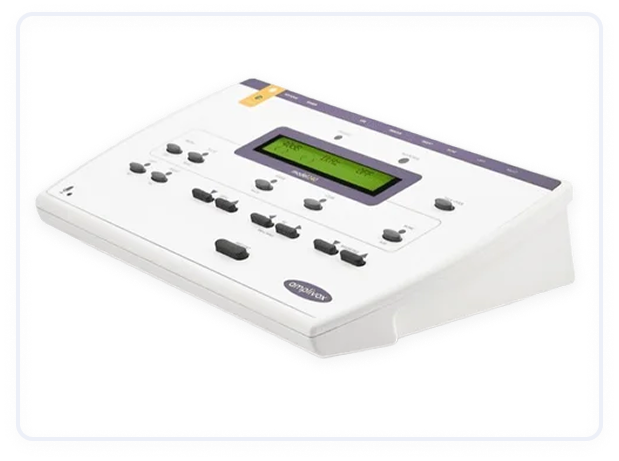
Digital Audio meter
A Digital Audiometer is a specialized device used to evaluate a person's hearing ability. It is a crucial tool in audiology for diagnosing hearing loss and assessing auditory function. Here are the key aspects of a digital audiometer:
Key Features of a Digital Audiometer
Digital Signal Processing (DSP) :
Precision in Testing : Digital audiometers use advanced signal processing technology to generate precise tones and noise at various frequencies and intensity levels. This allows for more accurate and consistent testing compared to analog models.
Calibration : These devices can be easily calibrated to industry standards, ensuring reliable results.
Frequency Range :
Wide Frequency Spectrum : Digital audiometers can test a broad range of frequencies, typically from 125 Hz to 8000 Hz, to assess various levels of hearing sensitivity across the human hearing range.
Custom Frequency Options : Some advanced models also offer extended frequencies, including high-frequency testing (above 8000 Hz) for specialized assessments, such as detecting early signs of noise-induced hearing loss.
Pure-Tone Testing :
Air Conduction : Tests how well sound travels through the air into the ear canal and eardrum.
Bone Conduction : Measures how sound is conducted through the bones of the skull to the inner ear, often used to differentiate between conductive and sensorineural hearing loss.
Speech Audiometry :
Speech Recognition : Allows for testing of a patient's ability to understand spoken words, often done at various volumes.
Word Lists : Includes standardized lists of words that are presented at different intensity levels to assess speech comprehension, often used for speech reception thresholds.
Automatic and Manual Modes :
Manual Mode : The audiologist manually adjusts the sound frequency and intensity during the test.
Automatic Mode : The device can automatically present sounds at various levels, speeding up the testing process for basic hearing screenings.
Patient Response Recording :
Threshold Determination : The patient responds by pressing a button or raising their hand when they hear a sound. The device records the softest sound the patient can detect at each frequency, known as the threshold of hearing.
Response Time : Digital audiometers track response times and ensure the patient hears all tones at correct intervals, enhancing the accuracy of the test.
Display and Data Output :
Digital Display : The results are displayed on a digital screen, where the audiogram (a graphical representation of hearing thresholds) is plotted.
Data Storage : Many modern audiometers can store test results for future reference or comparison, or even print reports for medical records.
Impedance Testing and Tympanometry :
Some digital audiometers include additional capabilities, such as impedance testing and tympanometry, which test the middle ear's response to sound and pressure. This helps in diagnosing middle ear problems like fluid buildup or eardrum perforation.
Portability :
Compact and Portable: Modern digital audiometers are lightweight and portable, allowing for easy use in various settings, from clinics to mobile hearing screening units.
Compatibility with Headphones and Insert Phones:
Calibration Flexibility : The device supports both traditional headphones and insert earphones, depending on the type of test being performed, making it adaptable to different testing environments.
Various industries
Request More Information
Contact Us to learn more about our offerings or Request a Quote to get started today!
Contact Us

