
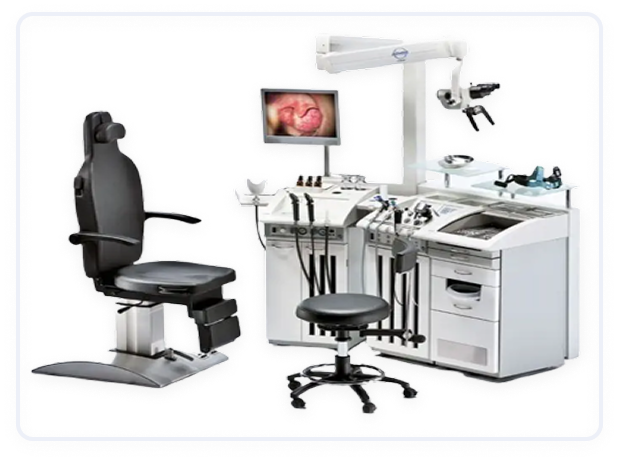
Ent Workstation
An ENT Workstation is a specialized system designed to help Ear, Nose, and Throat (ENT) specialists (also known as otolaryngologists) in diagnosing and treating various conditions that affect the ear, nose, throat, head, and neck. These systems integrate various medical technologies, including diagnostic equipment, endoscopes, imaging systems, and software solutions, to provide a comprehensive and efficient environment for patient care.
key features of an ENT Workstation
Advanced Imaging Capabilities
High-definition endoscopic cameras provide real-time, clear visuals for diagnosing and treating conditions in the ear, nose, and throat.
Integration with CT scans, MRI, or X-ray for comprehensive anatomical imaging of the head, neck, and sinuses.
Audiology and Hearing Testing
Audiometers assess hearing sensitivity and speech comprehension at varying frequencies and volumes.
Tympanometers test middle ear function, identifying issues like fluid buildup or ear infections.
Surgical Support Tools
Microsurgical instruments and endoscopic tools enable precise, minimally invasive procedures in delicate areas such as the sinuses and throat.
Image-guided navigation systems assist in precise surgical planning and execution, improving outcomes in complex surgeries.
Comprehensive Patient Management
Electronic Health Records (EHR) store patient history, diagnostic results, and treatment plans for easy access and continuity of care.
Scheduling and telemedicine features enhance appointment management and facilitate remote consultations.
Diagnostic Tools for ENT Disorders
Endoscopy (sinus, nasal, and laryngeal) allows for direct visualization of the internal structures to diagnose conditions like sinusitis, polyps, and tumors.
Otoscopy and audiometry help diagnose ear-related issues like infections, hearing loss, or balance disorders.
Data Storage and Accessibility
Digital image storage allows easy access to diagnostic images and videos for future comparisons or consultations.
Cloud integration enables secure sharing of patient data and images across devices and remote locations.
Interactive Touchscreen Interface
Touchscreen displays allow for intuitive navigation through patient data, diagnostic images, and video feeds.
Voice recognition software aids in hands-free documentation, improving workflow during consultations and procedures.
Non-invasive Testing and Monitoring
Oxygen saturation and respiratory monitoring help track airways and lung function, especially useful for ENT-related respiratory conditions.
Vestibular testing assists in diagnosing balance disorders such as vertigo, often linked to inner ear problems.
Advanced Surgical Tools
Endoscopic surgical instruments enable minimally invasive procedures, reducing recovery time and improving patient outcomes.
Robotic-assisted surgery enhances precision during complex surgeries, especially in delicate areas like the ear or throat.
Various industries
Request More Information
Contact Us to learn more about our offerings or Request a Quote to get started today!
Contact Us

