
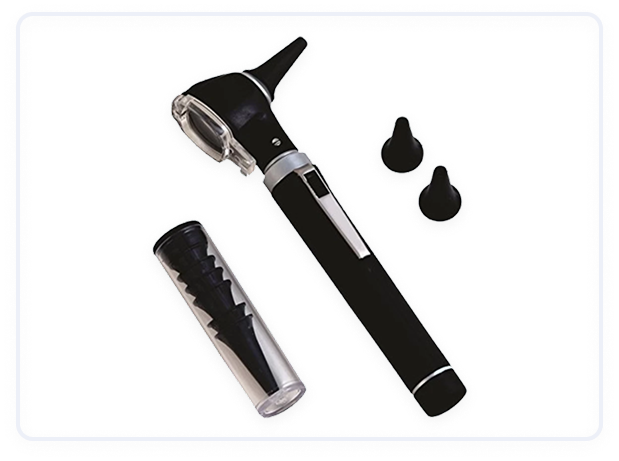
Otoscope
otoscope is a medical device used by healthcare professionals, particularly ENT (Ear, Nose, and Throat) specialists, general practitioners, and pediatricians, to examine the ear canal and tympanic membrane (eardrum). It is a crucial diagnostic tool for identifying ear infections, blockages, earwax buildup, and other abnormalities of the ear. The otoscope provides a clear view of the ear structures, aiding in the accurate diagnosis and treatment of various ear-related conditions.
Key Features of an Otoscope
Light Source:
The otoscope is equipped with an internal light source (typically an LED or halogen bulb) that illuminates the ear canal, allowing the examiner to clearly visualize the ear structures.
The light is essential for examining the ear canal, eardrum, and surrounding structures, especially in low-light conditions.
Magnification:
Most otoscopes have an integrated magnifying lens or optical system that helps increase the size of the viewed structures, making it easier to detect abnormalities such as infections, pus, earwax buildup, and tympanic membrane perforations.
Magnification typically ranges from 2x to 5x, offering enhanced detail and clarity during the examination.
Disposable or Reusable Specula:
The speculum (the part of the otoscope that is inserted into the ear) is usually made of disposable plastic or reusable metal.
Disposable specula are used for hygiene purposes, ensuring that the device remains clean between patients.
Reusable specula are typically made of metal and are sterilized after each use.
Ergonomic Design:
Otoscopes are designed to be lightweight and ergonomic, often with a pistol-grip or pen-like design, making them easy to handle and position while examining the ear.
Some models have a rotatable head, allowing for easy adjustment of the viewing angle without requiring the examiner to move the whole device.
Adjustable Light Intensity:
Many otoscopes feature an adjustable light intensity setting, allowing the user to control the brightness based on the patient's ear condition and lighting preferences.
This can be particularly useful when examining patients with sensitive ears or when more light is needed in certain areas of the ear canal.
Built-in Camera and Digital Features:
Some advanced otoscopes come with a built-in camera or digital imaging capabilities, allowing for real-time display of the ear structures on a monitor.
These digital otoscopes can capture images or videos of the ear examination, which can be stored, shared, or printed for medical records, consultations, or patient education.
Battery-Powered or Rechargeable:
Traditional otoscopes are battery-powered, with the battery compartment located at the handle of the device. Rechargeable models are also available, offering long-lasting battery life and reducing the need for constant battery replacements.
Compatibility with External Accessories:
Some otoscopes offer compatibility with external accessories like otoscope heads or video attachment kits, allowing for customization based on the user’s needs.
Video otoscopes allow for a more detailed examination by displaying the ear canal and eardrum on a screen, often used for patient education or teaching purposes.
Various industries
Request More Information
Contact Us to learn more about our offerings or Request a Quote to get started today!
Contact Us

