
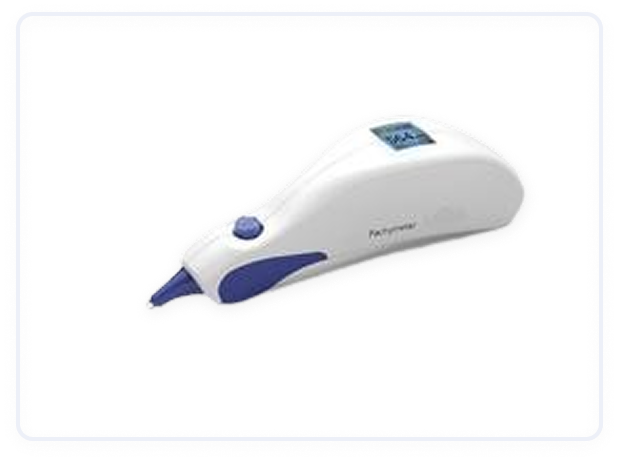
Pachymeter
A pachymeter is a diagnostic device used to measure the thickness of the cornea, which is the clear, dome-shaped surface that covers the front of the eye. Corneal thickness plays an important role in determining various eye conditions, planning surgeries, and monitoring certain ocular diseases. There are two primary types of pachymeters: ultrasound pachymeters and optical pachymeters, each using different methods to measure the corneal thickness.
Key Functions of a Pachymeter
Corneal Thickness Measurement:
The primary function of a pachymeter is to measure the central corneal thickness (CCT), which is essential for assessing overall eye health and determining the risk of certain eye conditions, such as glaucoma.
Preoperative Planning for Eye Surgery:
In preparation for refractive surgery (such as LASIK or PRK) or cataract surgery, pachymeters help determine the suitability of the cornea for surgery. The measurements guide surgeons in understanding the cornea’s shape and thickness, ensuring that enough tissue is left after surgery.
Glaucoma Management:
Corneal thickness is an important factor in glaucoma management. Thinner corneas can increase the risk of developing glaucoma, as it may lead to inaccurate intraocular pressure (IOP) readings. A pachymeter helps ophthalmologists get more accurate assessments and make better treatment decisions.
Monitoring Eye Health:
Pachymeters are also used to monitor changes in corneal thickness over time, which can indicate disease progression in conditions like keratoconus or post-surgical recovery.
Types of Pachymeters
Ultrasound Pachymeters:
Ultrasound pachymeters use sound waves to measure corneal thickness. A small probe is placed gently on the surface of the eye, and sound waves are emitted. The time it takes for the waves to return after bouncing off the cornea is measured to calculate the thickness.
Advantages:
Provides accurate measurements of the cornea.
Can be used for eyes with irregular shapes or surface abnormalities.
Disadvantages:
Requires physical contact with the eye, which may cause some discomfort for patients.
Requires the patient to be positioned correctly, and the test can be difficult for some individuals to tolerate.
Optical Pachymeters:
Optical pachymeters use light-based technology (usually laser or optical coherence tomography) to measure corneal thickness without making contact with the eye.
Advantages:
Non-contact, making the procedure more comfortable for patients.
Fast and precise, allowing for quick assessments.
Disadvantages:
Less accurate in certain conditions, such as with highly irregular corneas.
Typically requires the patient to keep their eye still and focused on a target.
Types of Pachymeters
Ultrasound Pachymeters:
Ultrasound pachymeters use sound waves to measure corneal thickness. A small probe is placed gently on the surface of the eye, and sound waves are emitted. The time it takes for the waves to return after bouncing off the cornea is measured to calculate the thickness.
Advantages:
Provides accurate measurements of the cornea.
Can be used for eyes with irregular shapes or surface abnormalities.
Disadvantages:
Requires physical contact with the eye, which may cause some discomfort for patients.
Requires the patient to be positioned correctly, and the test can be difficult for some individuals to tolerate.
Optical Pachymeters:
Optical pachymeters use light-based technology (usually laser or optical coherence tomography) to measure corneal thickness without making contact with the eye.
Advantages:
Non-contact, making the procedure more comfortable for patients.
Fast and precise, allowing for quick assessments.
Disadvantages:
Less accurate in certain conditions, such as with highly irregular corneas.
Typically requires the patient to keep their eye still and focused on a target.
Various industries
Request More Information
Contact Us to learn more about our offerings or Request a Quote to get started today!
Contact Us

