
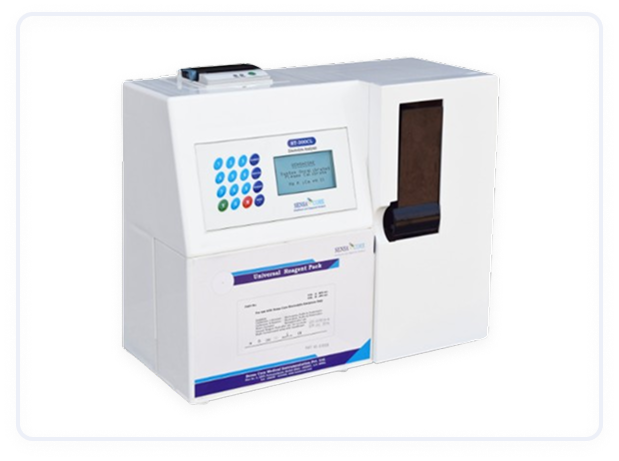
Automatic Immunoassay Analyzer
An Automatic Immunoassay Analyzer is a laboratory device used for the automated detection and quantification of specific substances (often proteins, hormones, or antibodies) in a biological sample through an immunoassay method. Immunoassays are biochemical tests that rely on the interaction between antigens and antibodies to measure the concentration of specific analytes in samples like blood, urine, or serum. These analyzers are widely used in clinical diagnostics, research, and pharmaceutical applications to detect various biomarkers, infections, and diseases.
Key Features of an Automatic Immunoassay Analyzer
High Throughput:
Automatic immunoassay analyzers are designed for high-volume testing. They can process multiple samples simultaneously, making them ideal for clinical laboratories, hospitals, and research institutions where large quantities of tests need to be performed rapidly.
Accuracy and Sensitivity:
These analyzers provide precise and sensitive results, capable of detecting low concentrations of analytes, making them ideal for diagnosing diseases like cancer, infectious diseases, and hormonal imbalances.
Automation:
The analyzer automates various stages of the immunoassay process, including sample loading, reagents dispensing, reaction incubation, and data analysis, significantly reducing human error and improving workflow efficiency.
Wide Assay Panel:
Immunoassay analyzers typically offer a broad range of assays to detect hormones, infectious agents, tumor markers, drugs, autoimmune diseases, and other biomarkers. Common tests include those for HIV, hepatitis, thyroid function, and pregnancy.
User-Friendly Interface:
These analyzers are equipped with intuitive interfaces, often featuring touchscreens or software platforms that allow laboratory technicians to quickly set up tests, view results, and manage sample data.
Calibration and Quality Control:
Many automatic immunoassay analyzers feature built-in automatic calibration and quality control systems to ensure the accuracy and reliability of test results over time. They often integrate with external controls to monitor performance.
Integration with Laboratory Information Systems (LIS):
These analyzers can connect with Laboratory Information Systems (LIS) to facilitate seamless data transfer and ensure efficient management of patient results. This integration allows for easy tracking, storage, and retrieval of test data.
Compact Design:
Some immunoassay analyzers are designed to be compact and space-efficient, allowing them to fit into small laboratory spaces without compromising on functionality.
Various industries
Request More Information
Contact Us to learn more about our offerings or Request a Quote to get started today!
Contact Us

