
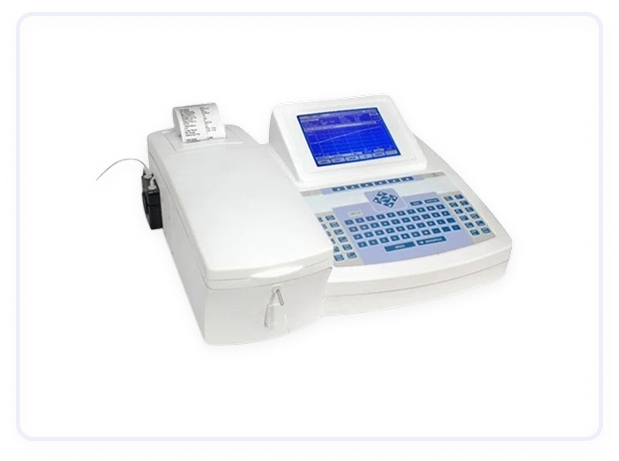
Semi Automated Biochemistry Analyzer
A Semi-Automated Biochemistry Analyzer is a laboratory instrument that performs biochemical tests on blood, urine, or other biological samples, but with a combination of manual and automated processes. Unlike fully automated systems, semi-automated analyzers require some human intervention, particularly in sample handling, reagent preparation, and sometimes result interpretation. These analyzers are more affordable and are commonly used in settings that do not require the high throughput of fully automated systems.
Key Features of a Semi-Automated Biochemistry Analyzer
Manual Sample Preparation : While the analyzer automates the testing process itself, it still requires manual preparation of samples, such as pipetting or mixing, before the analysis begins. Operators need to load the samples into the machine, which can be time-consuming but gives more control over sample management.
Test Menu : Semi-automated analyzers typically offer a wide range of tests for measuring blood glucose, lipid profiles, liver and kidney function tests, enzymes, and electrolytes. However, they might not cover as many tests as fully automated systems.
Reagent Handling : The operator is responsible for loading and sometimes mixing the reagents, although the analyzer itself will automatically dispense and measure them during testing. Some systems may require manual calibration of reagents and samples, depending on the complexity of the test.
Flexibility : Semi-automated systems offer greater flexibility than fully automated analyzers, allowing for customization in test panels. This is useful in labs that handle a broad spectrum of samples or need more specialized tests.
User Input and Control : These analyzers often require the operator to input data such as test type, sample identification, and patient information. While the analysis process is automated, manual oversight is essential for starting tests, changing reagents, or responding to error messages.
Speed and Throughput : Semi-automated analyzers are typically slower than fully automated systems in terms of throughput because they require more manual intervention. However, they are faster than manual testing methods and can process multiple samples per hour with reasonable efficiency.
Compact and Cost-Effective : Semi-automated analyzers are generally more compact and less expensive than fully automated systems, making them suitable for small- to mid-sized laboratories with moderate testing volumes or limited budgets.
Data Management : Some semi-automated analyzers come equipped with data management systems or can integrate with Laboratory Information Management Systems (LIMS). This allows for better tracking of patient data, test results, and sample handling, though manual data entry may still be required.
Lower Maintenance Costs : Semi-automated systems typically have lower maintenance costs compared to fully automated analyzers. They often require less frequent servicing and repair, making them a cost-effective choice for labs with limited resources.
Various industries
Request More Information
Contact Us to learn more about our offerings or Request a Quote to get started today!
Contact Us

