
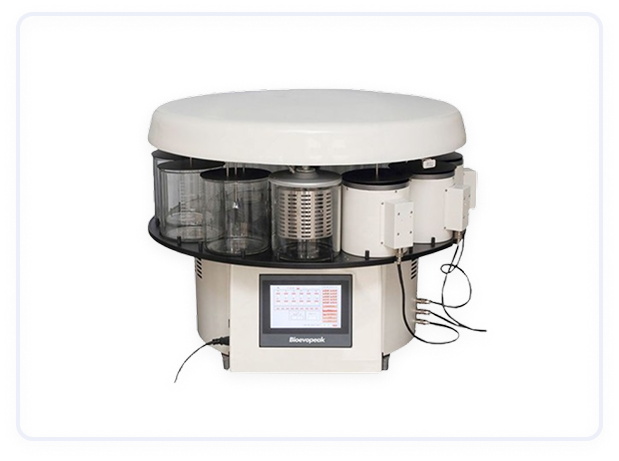
Tissue Processor
A Tissue Processor is a crucial piece of laboratory equipment used in the preparation of biological tissue samples for microscopic examination. It is primarily used in histology, where tissue samples are processed for the study of cellular structures and pathological changes. The tissue processor automates the process of embedding, fixing, and dehydrating tissue samples, ensuring that they are adequately prepared for histological staining and microscopic analysis. This automation helps improve accuracy, reduce labor, and speed up the processing time, making it essential for diagnostic and research laboratories.
Key Features of a Tissue Processor
Automated Processing : Tissue processors automate several steps in tissue preparation, including fixation, dehydration, clearing, infiltration, and embedding. This reduces the need for manual handling, ensuring consistent results and efficient workflow.
Multiple Chambers for Reagents : The device typically has multiple chambers where tissues can be processed sequentially. Each chamber holds a different reagent, such as formalin (for fixation), ethanol (for dehydration), xylene (for clearing), and paraffin (for infiltration).
Precise Temperature Control : Tissue processors often include temperature controls to regulate the processing of tissue samples. Maintaining specific temperatures is important for the efficient infiltration of tissues with paraffin or embedding media.
Time Control : Automated timers allow precise control over how long the tissue is exposed to each reagent. This ensures optimal processing, as improper timing can compromise tissue integrity.
Continuous or Batch Processing : Some tissue processors offer both continuous and batch processing modes. Continuous processors allow for uninterrupted sample processing, while batch processors are designed for handling multiple tissue samples simultaneously.
Safety Features : Tissue processors are equipped with safety features such as fume hoods for ventilation, alarms for temperature deviations, and emergency shutdown systems to protect both the operator and the equipment.
Ease of Use : Modern tissue processors are designed with user-friendly interfaces, allowing operators to set parameters, monitor progress, and make adjustments easily. Many devices also come with automatic protocols to streamline the process.
Space Efficient : The design of tissue processors is compact, making them suitable for laboratories with limited space while still being capable of processing large volumes of tissue samples.
Programmable Functions : Tissue processors often come with programmable settings that allow users to customize processing protocols according to the specific needs of the tissue type being processed.
Quality Control : Some tissue processors are equipped with features like suction or vacuum pressure to ensure that the reagents penetrate tissue samples uniformly, leading to high-quality sections for analysis.
Various industries
Request More Information
Contact Us to learn more about our offerings or Request a Quote to get started today!
Contact Us

