
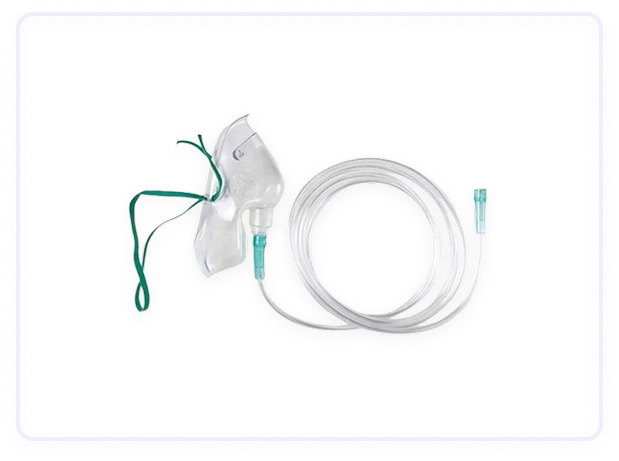
Oxygen Face Mask
An oxygen face mask is a medical device used to deliver supplemental oxygen to patients who are experiencing difficulty breathing or require extra oxygen due to various health conditions. The mask covers the nose and mouth, allowing oxygen to be delivered directly to the patient’s respiratory system, helping to ensure adequate oxygenation.
Key Components of an Oxygen Face Mask
Mask : The mask is typically made of soft plastic or silicone, designed to fit comfortably over the patient’s nose and mouth.
Elastic Straps : Adjustable straps help secure the mask around the patient’s head, ensuring a good fit to prevent oxygen leakage and ensure proper delivery.
Oxygen Tubing : The oxygen tubing connects the mask to the oxygen supply source, such as an oxygen tank, oxygen concentrator, or wall-mounted oxygen system.
Reservoir Bag (for non-rebreather and partial non-rebreather masks) : A reservoir bag is used to store oxygen, ensuring a continuous flow to the patient during inhalation. This bag fills with oxygen and provides a higher concentration for the patient.
One-Way Valves (for non-rebreather masks) : One-way valves are used to prevent exhaled air from re-entering the mask, ensuring that the patient only inhales fresh oxygen.
Uses of Oxygen Face Masks
Emergency Care : Oxygen masks are often used in emergency situations where a patient needs immediate oxygenation, such as during severe respiratory distress, heart failure, or shock.
Chronic Respiratory Conditions : For patients with COPD, emphysema, or asthma, oxygen face masks help deliver supplemental oxygen when the lungs are not able to take in enough oxygen.
Post-Surgery Recovery : Patients who have undergone surgery, particularly those that affect the chest or respiratory system, may need oxygen therapy during recovery.
Intensive Care Units (ICU) : Oxygen masks are frequently used in ICUs to provide high-flow oxygen to critically ill patients, especially those with conditions like acute respiratory distress syndrome (ARDS) or severe infections.
Transporting Critical Patients : In ambulance services, oxygen face masks are used to deliver oxygen during patient transport to the hospital, especially in cases where the patient is in respiratory failure.
Uses of Oxygen Face Masks
Emergency Care : Oxygen masks are often used in emergency situations where a patient needs immediate oxygenation, such as during severe respiratory distress, heart failure, or shock.
Chronic Respiratory Conditions : For patients with COPD, emphysema, or asthma, oxygen face masks help deliver supplemental oxygen when the lungs are not able to take in enough oxygen.
Post-Surgery Recovery : Patients who have undergone surgery, particularly those that affect the chest or respiratory system, may need oxygen therapy during recovery.
Intensive Care Units (ICU) : Oxygen masks are frequently used in ICUs to provide high-flow oxygen to critically ill patients, especially those with conditions like acute respiratory distress syndrome (ARDS) or severe infections.
Transporting Critical Patients : In ambulance services, oxygen face masks are used to deliver oxygen during patient transport to the hospital, especially in cases where the patient is in respiratory failure.
Request More Information
Contact Us to learn more about our offerings or Request a Quote to get started today!
Contact Us

