
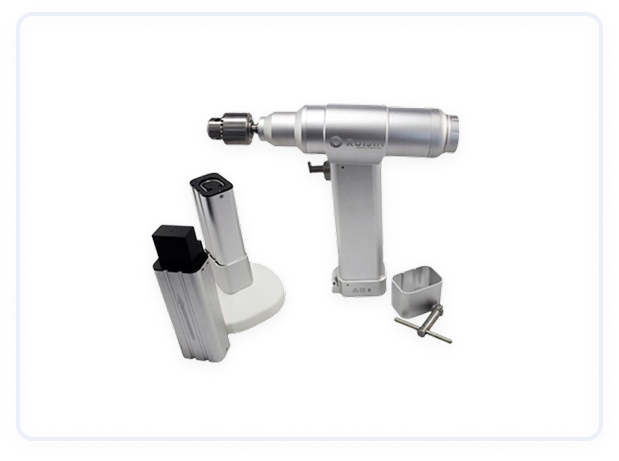
Surgical Drills
Surgical drills are specialized medical tools used in various surgical procedures to create holes or assist in the insertion of screws, pins, or other medical devices into bone or soft tissue. These drills are commonly used in orthopedic surgeries, dental procedures, and neurosurgical operations, among others.
Key Features of Surgical Drills
Speed Control:
Surgical drills offer variable speed settings. For example, dental drills may require very high RPMs (up to 400,000 RPMs), while orthopedic drills may operate at much lower speeds (1,000 to 4,000 RPMs) to avoid overheating and damage to bone or surrounding tissues.
Torque Control:
Adjustable torque settings are essential to prevent overdriving screws or damaging bones. Some drills feature a built-in clutch mechanism to stop the drill when a set level of resistance is reached.
Ergonomics:
Surgical drills are designed to minimize fatigue, as surgeons often use them for extended periods. Features like lightweight materials, ergonomic handles, and balanced designs are important to reduce hand and wrist strain.
Sterilization:
Sterilization is a critical feature for surgical drills. Most surgical drills are designed to be easily cleaned and sterilized. Some are even disposable to ensure that no cross-contamination occurs between procedures.
Precision and Control:
Most surgical drills have built-in mechanisms that allow for high precision, whether it’s controlling speed, torque, or depth. Some models use specialized guiding mechanisms to help surgeons drill in exactly the right spot.
Types of Surgical Drills
Orthopedic Drills:
Used to drill into bones during surgeries like fracture repair, joint replacement, and spinal surgeries.
These drills can be manual or powered, with electric or pneumatic (air-powered) versions being common.
Dental Drills:
Used by dentists to remove decayed tooth material, shape teeth, or prepare cavities for fillings.
They can be powered by air, electricity, or battery and are usually much smaller and more precise than orthopedic dri
Neurosurgical Drills:
Used for drilling into the skull during procedures like craniotomies.
These drills are often equipped with a depth stop to prevent injury to the underlying brain.
Bone Drills:
Used specifically for drilling into bone to place screws or pins for stabilization during surgery.
They often feature specific attachments to adjust speed and torque for different types of bone.
Types of Surgical Drills
Orthopedic Drills:
Used to drill into bones during surgeries like fracture repair, joint replacement, and spinal surgeries.
These drills can be manual or powered, with electric or pneumatic (air-powered) versions being common.
Dental Drills:
Used by dentists to remove decayed tooth material, shape teeth, or prepare cavities for fillings.
They can be powered by air, electricity, or battery and are usually much smaller and more precise than orthopedic dri
Neurosurgical Drills:
Used for drilling into the skull during procedures like craniotomies.
These drills are often equipped with a depth stop to prevent injury to the underlying brain.
Bone Drills:
Used specifically for drilling into bone to place screws or pins for stabilization during surgery.
They often feature specific attachments to adjust speed and torque for different types of bone.
Various industries
Request More Information
Contact Us to learn more about our offerings or Request a Quote to get started today!
Contact Us

