
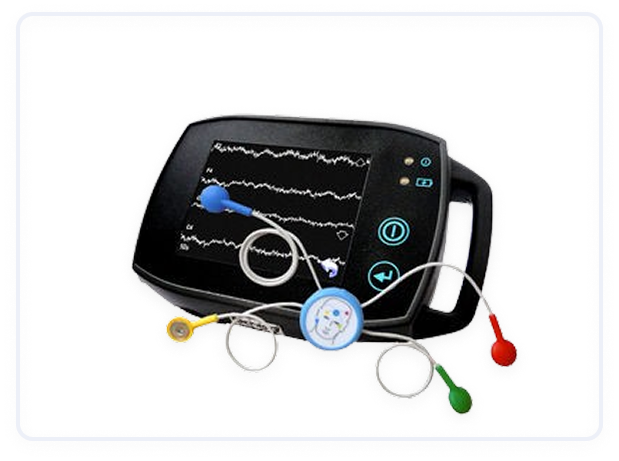
Ambulatory polysomnography (PSG)
Ambulatory Polysomnography (PSG) refers to a sleep study that monitors various physiological parameters during sleep, typically outside a traditional sleep clinic or hospital setting. This type of Polysomnography is used to diagnose sleep disorders, including sleep apnea, insomnia, restless leg syndrome, and narcolepsy, in a more convenient and cost-effective way for patients, as they can perform the test at home.
Key Features of Ambulatory Polysomnography (PSG)
Comprehensive Sleep Monitoring:
Like traditional in-lab PSG, ambulatory PSG measures a wide range of physiological signals during sleep, including:
Brain activity (EEG): Detects sleep stages.
Eye movements (EOG): Monitors REM sleep.
Muscle activity (EMG): Records muscle tone during sleep and detects sleep disorders like restless leg syndrome.
Heart rate (ECG): Monitors heart function.
Respiratory effort (nasal airflow and chest movements): Detects sleep apnea and breathing irregularities.
Oxygen saturation (SpO2): Measures oxygen levels in the blood.
Leg movements: Assesses movements that may indicate periodic limb movement disorder.
Snoring sounds: Used to assess snoring and airflow.
Portable Equipment:
Ambulatory PSG uses portable devices that patients can easily wear overnight at home, offering a more convenient alternative to the traditional, in-lab sleep study. The equipment is generally lightweight, with sensors that can be attached to the skin or body in various locations to record the necessary parameters.
Portable recorders may include sensors for EEG, ECG, oxygen saturation, and respiratory effort, all of which are used to gather detailed data about the patient's sleep patterns.
Comfort and Convenience:
One of the biggest advantages of ambulatory PSG is that it allows patients to sleep in their own environment. This can help eliminate the stress or anxiety some people feel when sleeping in an unfamiliar clinical setting.
Ambulatory PSG is especially suitable for people who may have difficulty undergoing an in-lab sleep study due to logistical or financial reasons.
Data Collection and Analysis:
The data collected during the sleep study is typically recorded on a small portable device, which can then be reviewed by a healthcare professional.
Advanced software is often used to analyze the recorded data, helping sleep specialists interpret the results and diagnose sleep disorders.
The study provides insights into sleep stages, disruptions, breathing patterns, oxygen levels, and muscle activity throughout the night.
Wireless Connectivity:
Some ambulatory PSG systems offer wireless or Bluetooth capabilities, allowing for real-time data transmission to healthcare providers. This feature enables remote monitoring and analysis by sleep specialists without the need for patients to return to the clinic.
Easy Setup:
Modern ambulatory PSG systems are designed to be easy for patients to set up and use, with instructions typically provided through video tutorials or manuals. Sensors are generally attached to the skin with adhesive electrodes, and the device itself is worn comfortably, often on a wrist or chest.
Various industries
Request More Information
Contact Us to learn more about our offerings or Request a Quote to get started today!
Contact Us

