
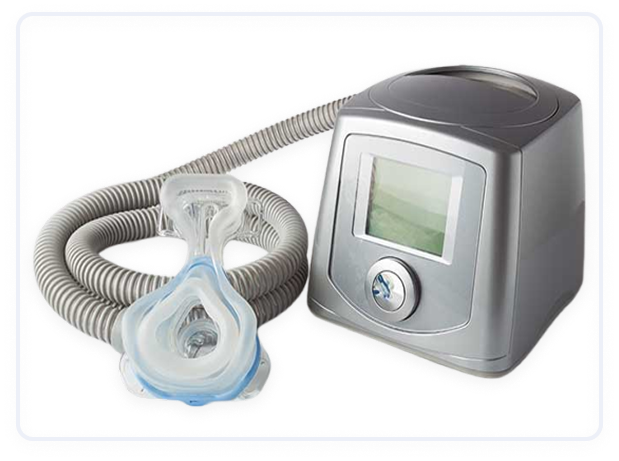
Continuous Positive Airway Pressure (C-PAP)
Continuous Positive Airway Pressure (CPAP) Products are specialized medical devices designed to treat sleep apnea, particularly Obstructive Sleep Apnea (OSA). CPAP devices deliver a constant flow of air through a mask to keep the airways open during sleep. There are various CPAP machines, accessories, and features available on the market, catering to different needs and preferences.
Key Features of Continuous Positive Airway Pressure (CPAP)
Adjustable Air Pressure
Fixed Pressure : Some CPAP machines deliver a constant, fixed air pressure throughout the night, which is typically set by the doctor based on the patient's needs.
Auto-adjusting Pressure (APAP) : These devices automatically adjust the air pressure throughout the night based on the user’s breathing patterns, providing more comfort and flexibility.
Mask Compatibility
Nasal Masks : These cover only the nose and are ideal for people who breathe primarily through their nose during sleep.
Full-Face Masks : These cover both the nose and mouth, suitable for those who breathe through their mouth or have nasal obstructions.
Nasal Pillows : Small, soft cushions that fit into the nostrils, offering minimal contact with the face and are preferred by people who feel claustrophobic with larger masks.
Heated Humidification
Built-in Humidifiers : Many CPAP machines come with an integrated humidifier to help reduce dryness in the nose, throat, or mouth by adding moisture to the air. This improves comfort and helps prevent irritation and congestion.
Heated Humidifiers : Heated water reservoirs can warm the moisture in the air to prevent condensation (rainout) in the hose, especially in colder climates or air-conditioned rooms.
Noise Reduction
Quiet Operation : Modern CPAP machines are designed to operate quietly, typically at 25-30 decibels or lower, making them quieter than most household appliances and allowing for a more restful sleep without disturbing the user or bed partner.
Noise-Reducing Features : Machines like the ResMed AirSense 10 and Philips DreamStation feature noise-reducing technologies that make therapy less disruptive.
Data Tracking and Connectivity
Wireless Connectivity : Many CPAP machines can connect to Wi-Fi or Bluetooth, allowing them to transmit data to apps or websites, enabling remote monitoring by healthcare providers.
Mobile Apps : Some machines come with companion apps (e.g., ResMed’s myAir or Philips DreamMapper) that track sleep data, offer usage reports, and provide feedback to improve therapy.
Sleep Data Reports : Most CPAP devices track essential metrics such as hours of use, mask leak rates, apnea events, and oxygen levels, helping doctors or patients assess the effectiveness of the therapy.
Various industries
Request More Information
Contact Us to learn more about our offerings or Request a Quote to get started today!
Contact Us

