
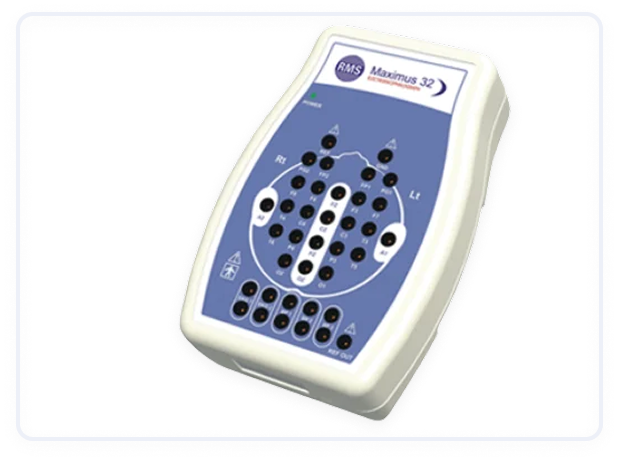
EEG (Electroencephalogram) Machine - 24/32 Channel
EEG (Electroencephalogram) Machine is a medical device used to measure and record the electrical activity of the brain. It is used primarily to diagnose neurological conditions such as epilepsy, sleep disorders, brain injuries, and other neurological disorders. A 24-channel or 32-channel EEG machine refers to the number of electrodes that the machine uses to measure electrical activity from different regions of the brain.
Key Features of 24/32 Channel EEG Machines
Multiple Channels for Comprehensive Monitoring:
24-Channel EEG : A 24-channel EEG uses 24 electrodes placed on the scalp to record brain activity, providing a good level of detail for diagnosing neurological conditions.
32-Channel EEG : A 32-channel EEG, on the other hand, uses 32 electrodes, which allows for even more detailed recordings and better spatial resolution of the brain's electrical activity.
High-Resolution Signal Recording:
Both 24- and 32-channel EEG machines provide high-quality, high-resolution recordings of brain wave patterns. The increased number of channels allows for more detailed mapping of brain activity, making it easier to detect abnormalities.
Improved Diagnostic Capability:
Seizure Monitoring : A 24/32-channel EEG is highly effective for monitoring and diagnosing epileptic seizures and other forms of epilepsy. The ability to monitor more brain regions allows for the detection of subtle seizure activity that may not be captured by fewer channels.
Sleep Studies : These machines are also used for diagnosing sleep disorders by monitoring brain wave activity during sleep stages, making them useful in sleep studies (polysomnography).
Real-Time Data Acquisition and Analysis:
EEG machines with 24/32 channels are capable of real-time data acquisition, which allows doctors to observe brain activity as it happens. This feature is critical for continuous monitoring, especially for patients with ongoing neurological issues.
Patient Comfort and Flexibility:
Modern 24/32-channel EEG systems are designed with patient comfort in mind, ensuring that the electrodes are easy to place on the scalp and that the machine is not bulky or intrusive.
Advanced Visualization and Software:
Signal Display : The software included with these machines can provide various visual representations of brain activity, such as spectrograms, topographic maps, or 3D brain models.
Long-Term Monitoring:
Some EEG machines are designed for ambulatory monitoring, allowing patients to wear a portable EEG for long periods (days or even weeks) while going about their normal activities. This is particularly important for diagnosing conditions that may not appear during a short hospital visit.
Long-term monitoring devices are used to observe seizure frequency, patterns, and triggers in patients with epilepsy.
Multiple Electrode Types:
Standard Electrodes : Typically, EEG machines use Ag/AgCl electrodes, which provide excellent signal quality for brain wave measurement.
Flexible and Dry Electrodes : Some systems use dry or flexible electrodes, which are easier to apply and more comfortable for the patient, especially in extended recording scenarios.
Various industries
Request More Information
Contact Us to learn more about our offerings or Request a Quote to get started today!
Contact Us

