
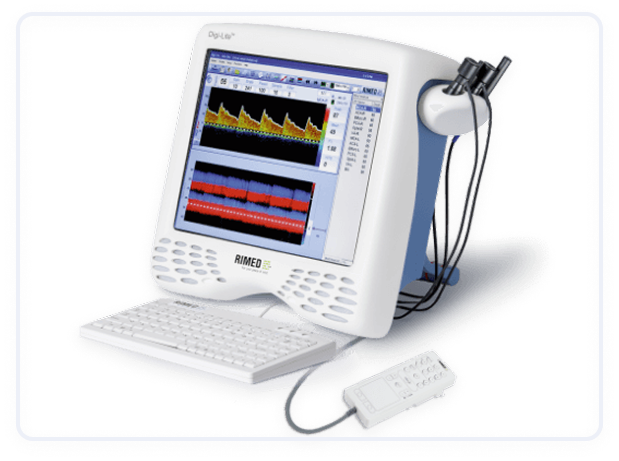
Portable Transcranial Doppler (TCD)
A Portable Transcranial Doppler (TCD) is a medical device used to measure the velocity of blood flow in the brain's major arteries. By emitting ultrasound waves that reflect off moving blood cells, the device provides information on the blood flow in real time. This non-invasive technique is widely used to assess cerebral circulation, particularly in patients with conditions that may affect blood flow to the brain, such as stroke, vascular malformations, or cerebral aneurysms.
Key Features of Portable Transcranial Doppler (TCD)
Portability:
One of the main advantages of a portable TCD is that it is lightweight and compact, allowing for easy transportation between different locations. This is especially useful for healthcare professionals who need to perform assessments at the patient's bedside, in the emergency room, or in outpatient settings.
Non-Invasive Monitoring:
TCD is non-invasive, meaning it does not require surgery or insertion of devices into the body. The device uses ultrasound waves to assess blood flow, which makes it a safer and less uncomfortable option for patients.
Real-Time Blood Flow Monitoring:
The portable TCD device provides real-time data on the velocity of blood flow in the brain’s arteries, including the middle cerebral artery, anterior cerebral artery, and vertebral arteries. This allows healthcare providers to make quick assessments, particularly in emergency situations.
TCD is especially useful for detecting abnormal blood flow patterns that may indicate cerebral ischemia, vasospasm, or strokes.
Easy-to-Use Interface:
Most portable TCD devices come with intuitive interfaces that allow healthcare providers to easily navigate the system. This may include touchscreen displays, detailed visualizations of blood flow, and simple controls for adjusting settings.
Automatic velocity measurement and color-coded displays enhance ease of use, reducing the likelihood of human error.
High Sensitivity and Accuracy:
Portable TCD machines are designed to provide high levels of sensitivity and accuracy in detecting blood flow changes. This makes it an essential tool in diagnosing cerebrovascular conditions and monitoring patients in critical care settings.
Battery-Powered:
Many portable TCD machines are battery-operated, allowing for use in various settings, including emergency rooms, ICUs, and field hospitals. This mobility ensures continuous monitoring in different locations without needing access to fixed power sources.
Durable and Rugged Design:
The portable nature of the device means it must be able to withstand frequent transport and rough handling. Therefore, portable TCD devices are often designed to be rugged and durable, ensuring long-lasting performance even in high-use environments.
Data Storage and Connectivity:
Some portable TCD devices are equipped with the ability to store patient data, which can be reviewed at a later time. Additionally, modern devices may support wireless connectivity or integration with hospital information systems (HIS) or electronic health records (EHR), enabling seamless data transfer and remote monitoring.
Various industries
Request More Information
Contact Us to learn more about our offerings or Request a Quote to get started today!
Contact Us

