
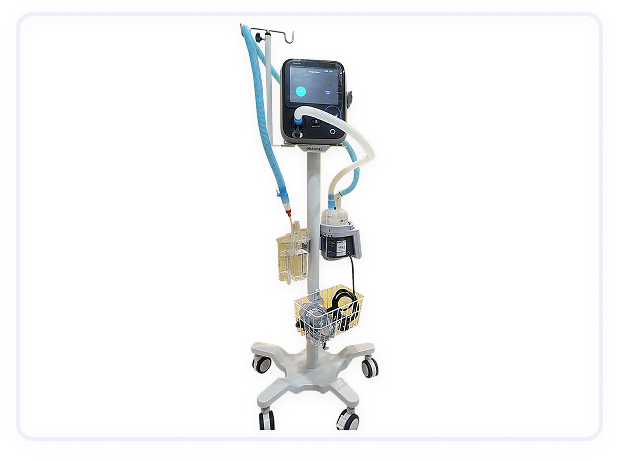
Hfnc System
HFNC (High Flow Nasal Cannula) System for NICU is a vital tool for neonatal respiratory support, especially for preterm infants and newborns with respiratory distress syndrome (RDS), bronchiolitis, or other respiratory issues. The system delivers high-flow oxygen via a nasal cannula and provides humidified, heated air, making it easier for infants to breathe and helping to improve oxygenation while minimizing the need for more invasive procedures like mechanical ventilation.
Key Features and Benefits
High-Flow Oxygen Delivery:
HFNC systems deliver high flow rates (up to 8-15 L/min for neonates), which helps maintain adequate oxygen levels in infants who have difficulty breathing or need additional oxygen to support their respiratory function.
Humidified and Heated Oxygen:
The oxygen delivered is humidified and warmed, preventing drying out of the delicate airways and helping maintain normal body temperature, which is a critical concern for premature or ill infants. This is especially important since infants, particularly preterm babies, are at risk of hypothermia and airway irritation.
Non-Invasive Respiratory Support:
Unlike mechanical ventilation or intubation, HFNC is non-invasive. This reduces the risk of infections, airway damage, and complications associated with invasive ventilation.
It allows infants to breathe spontaneously while receiving support to maintain oxygen levels and reduce the effort required for breathing.
Positive Pressure Support:
HFNC provides a gentle positive pressure in the airways, which can help keep the airways open, improving lung expansion and reducing the work of breathing. This is especially beneficial for newborns with conditions like respiratory distress syndrome (RDS) or apnea of prematurity.
Improved Comfort for the Infant:
Since HFNC uses a nasal cannula, it is more comfortable and less intrusive than other oxygen delivery methods like face masks or CPAP (Continuous Positive Airway Pressure). This can help reduce stress on the infant, leading to better tolerance and comfort during therapy.
Easy Monitoring and Adjustment:
HFNC systems typically have easy-to-adjust settings, allowing clinicians to modify oxygen flow rates and humidification levels according to the infant’s needs. This allows for personalized care based on the infant's condition and response to therapy.
Reduced Need for Invasive Ventilation:
One of the most significant advantages of HFNC is its ability to reduce the need for mechanical ventilation. For many infants with respiratory distress or other conditions requiring respiratory support, HFNC can help avoid the need for intubation, thus minimizing the risk of complications such as ventilator-associated pneumonia.
Various industries
Request More Information
Contact Us to learn more about our offerings or Request a Quote to get started today!
Contact Us

