
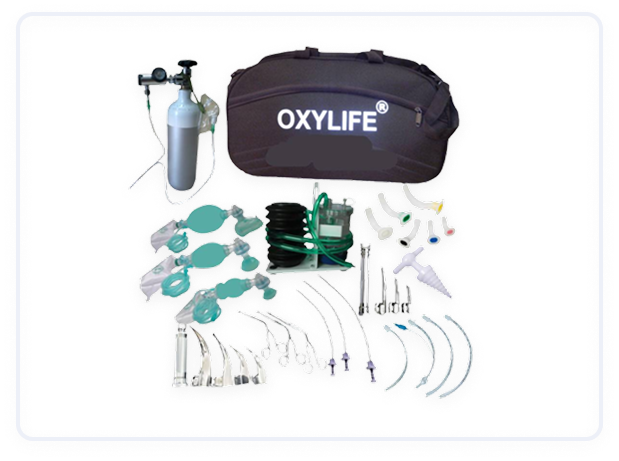
Resuscitation Accessories
Resuscitation accessories are critical tools used in Neonatal Intensive Care Units (NICUs) to assist in the neonatal resuscitation process. These accessories play an essential role in ensuring effective ventilation, airway clearance, and oxygenation in newborns who require assistance breathing, such as those born prematurely, with birth asphyxia, or respiratory distress.
Key Features of ICU Ventilator
Endotracheal Tubes (ETTs)
Purpose: Used to establish and maintain an open airway in newborns who need mechanical ventilation or are unable to breathe effectively on their own.
Types: Available in various sizes depending on the infant’s size and gestational age, particularly for preterm infants.
Key Features: Made from flexible, non-toxic materials with cuffed or uncuffed options to help provide effective ventilation.
Resuscitation Masks
Purpose: Used to deliver positive pressure ventilation (PPV) to infants who are not breathing or need help initiating breathing.
Types: Includes self-expanding masks, facial masks, and infant-sized masks designed specifically for neonates.
Key Features: Soft, silicone material to ensure a secure seal over the infant’s mouth and nose, minimizing leaks while maintaining comfort.
Neonatal Resuscitation Bags (Self-Expanding Bag or Bag-Valve Mask)
Purpose: Provides manual ventilation to the neonate when immediate respiratory support is needed, such as in cases of respiratory failure or apnea.
Types: Ambu bags or self-expanding bags are often used in conjunction with a facemask or endotracheal tube.
Key Features: Includes an adjustable oxygen inlet, pressure-limiting valve to prevent overinflation, and a manual squeeze bulb for ventilation.
Suction Catheters
Purpose: Used to remove excess mucus, secretions, or meconium from the infant’s airways during the resuscitation process or routine care to maintain airway patency.
Types: Available in various sizes and materials (usually soft and flexible) to prevent injury to delicate airway tissues.
Key Features: Closed suction system to minimize contamination and the risk of infection. The catheters are available in both single-use and reusable versions.
T-piece Resuscitator (TPR)
Purpose: Used to deliver positive pressure ventilation (PPV) to neonates during resuscitation, often in the delivery room or in an emergency situation.
Key Features: Provides controlled ventilation with the ability to adjust peak inspiratory pressure (PIP) and positive end-expiratory pressure (PEEP). It’s especially useful in infants who are at risk of respiratory failure.
Laryngeal Mask Airway (LMA)
Purpose: An alternative to endotracheal intubation for airway management in infants who may require resuscitation but where intubation is difficult or undesirable.
Key Features: Non-invasive airway support that helps provide ventilation and oxygenation without the need for endotracheal tubes. It is often used in situations where intubation is challenging.
Oxygen Supply and Delivery Systems
Purpose: Provides oxygen therapy to neonates during resuscitation or when there is a need for supplemental oxygen.
Key Features: Includes oxygen cylinders, flow meters, and humidifiers to maintain appropriate oxygen levels and prevent dry airway damage.
Types: Nasal cannulas, oxygen masks, and CPAP devices are common for oxygen delivery in the NICU.
Pulse Oximeter Probes
Purpose: Used to continuously monitor the infant’s oxygen saturation (SpO2) during resuscitation or ventilation.
Key Features: Neonatal pulse oximeter probes are designed for small patients and typically provide accurate readings of blood oxygen levels, ensuring the resuscitation efforts are effective.
Request More Information
Contact Us to learn more about our offerings or Request a Quote to get started today!
Contact Us

