
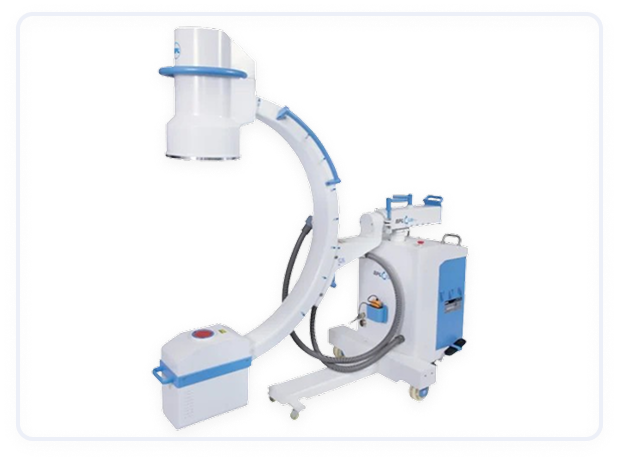
C-Arm Machine
A C-Arm Machine is a specialized medical imaging device that is commonly used during surgical procedures to provide real-time X-ray images. The device's name, C-arm, comes from the shape of the machine, which features an arm that is shaped like the letter "C" and is capable of rotating around the patient to obtain images from various angles. C-arm machines are used in a wide variety of medical fields, especially in orthopedic surgery, neurological procedures, spinal surgery, and vascular surgery, among others. They are highly valued for their ability to provide dynamic imaging, which helps surgeons to visualize and navigate during surgery without the need for large, traditional X-ray equipment.
Key Features and Components of a C-Arm Machine
X-ray Source:
The C-arm has an X-ray tube on one side that generates X-rays. These X-rays pass through the body of the patient and are captured by the image receptor on the opposite side.
Image Intensifier or Flat-Panel Detector:
The traditional image intensifier amplifies the X-ray images, making them brighter and clearer for real-time viewing. Modern C-arms may use a flat-panel detector, which provides better image quality, more precision, and allows for digital imaging.
C-shaped Arm:
The defining feature of a C-arm is its ability to rotate around the patient, allowing the operator to acquire X-ray images from different angles, such as frontal, lateral, or oblique views. This flexibility is essential for dynamic imaging in a surgical setting.
Monitor:
The real-time images produced by the C-arm are displayed on a monitor, typically in the operating room, so the surgical team can view the images as the procedure progresses. Modern systems may offer high-definition displays for better clarity.
Control Panel:
The operator can adjust the C-arm’s settings from a control panel, where they can select parameters such as exposure time, intensity, and image processing options.
Mobile or Stationary Base:
C-arm machines can either be mobile, making them easy to move between rooms and patients, or stationary, where the machine remains fixed in a single location (typically used in specialized operating rooms).
Collimator:
The collimator controls the size and shape of the X-ray beam, allowing the operator to focus the radiation on a specific area to reduce unnecessary exposure to the surrounding tissues.
Various industries
Request More Information
Contact Us to learn more about our offerings or Request a Quote to get started today!
Contact Us

